
Composite vs porcelain veneers in Ireland
Direct composite veneers cost €250 to €450 per tooth and require zero tooth drilling in a single visit, lasting 5 to 7 years. Hand-crafted porcelain (E.max ceramic) veneers cost €750 to €1,200 per tooth (€600 to €960 after 20% Form Med 2 tax relief), usually require 0.3mm to 0.7mm of enamel preparation across two visits, and last 10 to 15+ years without staining.
Comparing upfront cost, 10-year cost, enamel drilling, repairability and Revenue tax relief.
Free, no obligation. One registered dental clinic in your county replies, not five.
Calculate your composite veneers smile package
Select how many upper front teeth you want to veneer, whether you prefer single-visit freehand sculpting or digital injection-moulded / lab veneers, and whether to include pre-whitening and a protective nightguard.
Estimated smile package
€1,400 to €2,400
6 teeth (canine to canine) · Direct chairside composite veneers
Guide price of €1,400 to €2,400 for 6 upper front teeth (canine to canine) using direct chairside composite veneers. By comparison, the same 6 teeth (canine to canine) in lab-made porcelain veneers would cost €4,500 to €7,200 (€3,600 to €5,760 after 20% Med 2 tax relief).
Ask a local clinic for a quoteComposite veneers vs porcelain veneers side by side
| Comparison point | Composite veneers (direct / digital) | Porcelain / E.max veneers (ceramic) |
|---|---|---|
| Cost per tooth in Ireland | €250 to €450 (direct) · €450 to €650 (digital) | €750 to €1,200 (€600–€960 after 20% Med 2) |
| 6 upper front teeth (gross) | €1,400 to €2,400 (direct) | €4,500 to €7,200 (€3,600 to €5,760 net after Med 2) |
| Tooth drilling / enamel removal | None (additive / reversible) on most teeth | Usually 0.3mm to 0.7mm of enamel shaved off (irreversible) |
| Appointments needed | 1 visit (direct) or 2 visits (digital stent) | 2 to 3 visits over 2 to 3 weeks (temporary veneers worn in between) |
| Stain & gloss retention | Porous over years; needs a yearly polish ({r(POLISH)}) if you drink black coffee or red wine | Glazed glass-ceramic; never stains or loses its shine |
| If you chip a corner | Repaired invisibly in the chair in 20 minutes (€90 to €180) | Cannot be patched reliably — the whole porcelain veneer usually must be remade |
| Typical lifespan | 5 to 7 years (up to 8–10 yrs for lab composite) | 10 to 15+ years |
| 20% Form Med 2 tax relief | Excluded if purely cosmetic | Qualifies for 20% tax relief on Form Med 2 |
When composite makes more sense — and when porcelain wins
- Choose composite veneers if: you are under 35 and want to keep 100% of your natural tooth enamel untouched, you want a fast same-day result at roughly a third of the upfront cost of porcelain, or you want to 'test-drive' a new smile shape for 5 years before ever committing to ceramic.
- Choose porcelain veneers if: you want permanent glass-like translucency that never picks up coffee or red-wine stains, you are masking heavy dark tetracycline staining across 8 to 10 teeth, or you already have heavily filled teeth and want a 15-year restoration with 20% Med 2 tax relief.
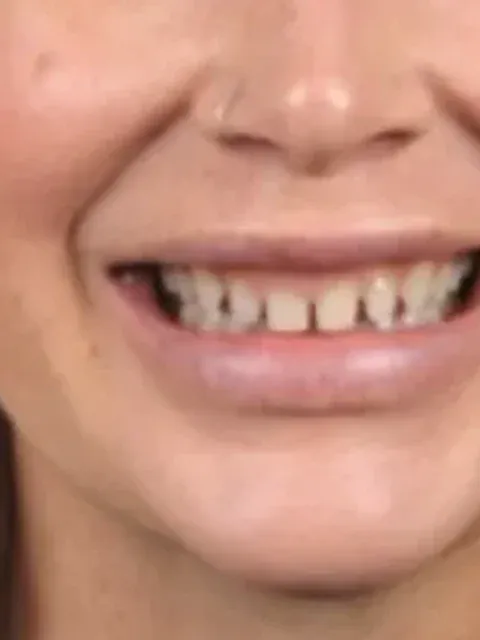
Real examples and installation detail



Get a composite veneers price from one local clinic
Pick how many teeth you are considering, where things stand and your county. Your enquiry goes to one Dental Council-registered cosmetic dental clinic covering your county to arrange a consultation and written quote.
Composite veneers guides & price breakdowns
Straight answers to what people ask most: itemised costs, specifications, planning or grants, and what to check before you book.
More guides & resources: All guides & calculator hub · Technical & trade glossary · Frequently asked questions · All areas covered · About this site
Questions patients ask
Can I upgrade from composite veneers to porcelain veneers years later?
Yes — that is one of the biggest advantages of starting with additive composite veneers. Because your natural enamel underneath was not drilled down, when your composite veneers reach the end of their 5 to 7 year lifespan you can either have fresh composite placed or transition to porcelain veneers.
Why do porcelain veneers qualify for 20% tax relief while composite veneers usually don't?
Revenue's Form Med 2 guidance explicitly lists crowns and veneers (historically referring to laboratory-fabricated veneers) as qualifying non-routine treatments, while excluding routine fillings and cosmetic composite bonding.
Composite veneers across all 26 counties
Requests from all 26 counties go to one vetted local specialist who covers your county — from Dublin, Cork, Galway and Limerick to Kildare, Meath, Wicklow, Waterford and Donegal. Pick your county below for local prices, specifications and advice. Compare all areas covered →
Want a clear price for composite veneers?
One Dental Council-registered clinic covering your county contacts you. Nothing is booked until you have a written treatment plan.